


I grew up working in my family’s butcher shop on a North London High Street. As a teenager, I would help behind the counter, serving customers who weren’t simply customers. They were neighbours, familiar faces, people whose families we knew and whose lives crossed ours regularly.
In those days the High Street was part of the rhythm of everyday life. You went to the butcher for your meat, the greengrocer for your vegetables, the baker for your bread and the newsagent for your paper. But you also went for conversation, gossip, news and human contact. Nobody talked about “building community”. It was simply there.
And now, all these decades later, I find myself living right on another High Street, this time in Wincanton, a small British town in rural Somerset. And somehow, for many of the same reasons, it feels exactly where I am meant to be right now.
Because after a lifetime that has taken me from North London into the worlds of fashion, business, media and women’s empowerment, and to living in and visiting villages, towns and cities all over the world, I look out of my window onto a High Street again.
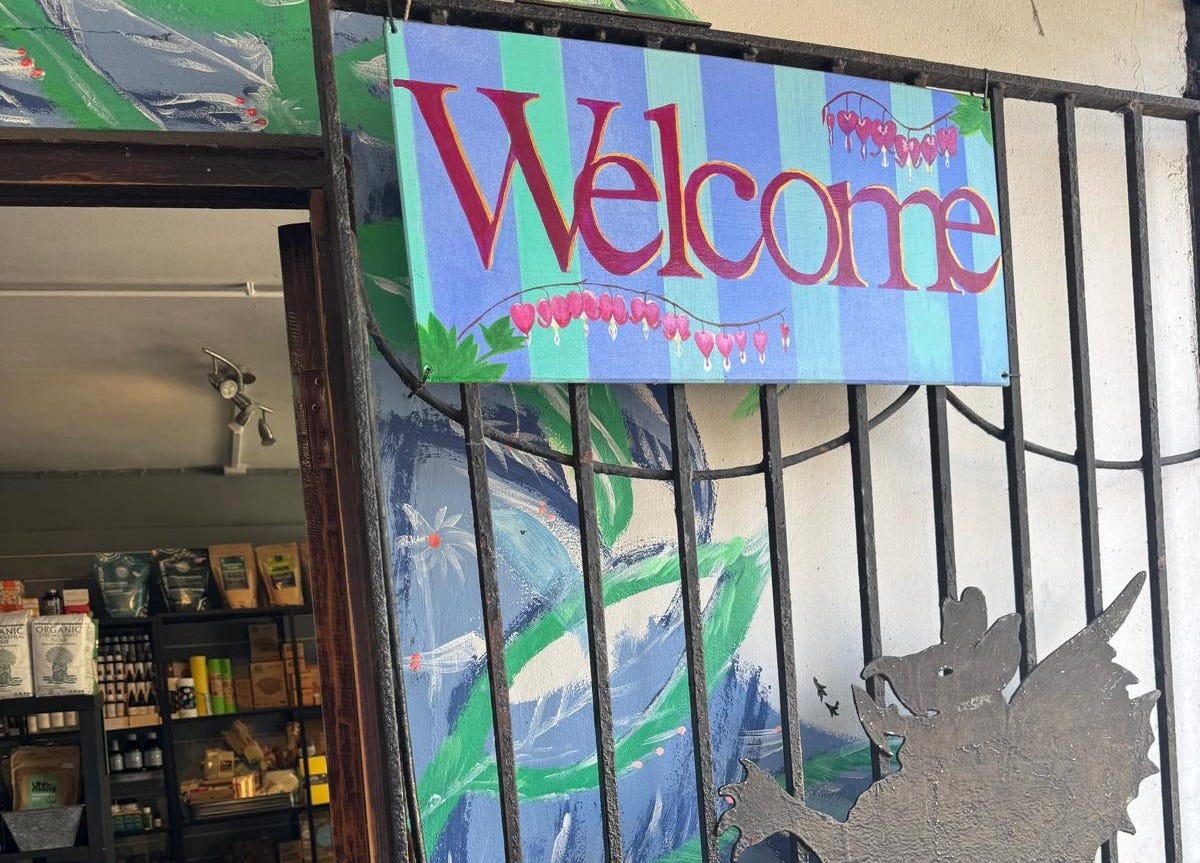
And I love it. Even the comforting bells chiming on the hour from the local church throughout the night.
Wincanton isn’t trying to be somewhere else. It isn’t polished or perfect, and I hope it never becomes so. It is quirky, creative, slightly eccentric and increasingly full of interesting independent businesses, while still remaining a real working town where all sorts of people live and belong.
We have our own butcher, greengrocer, chemist, post office and newsagent. We have antiques and vintage, designer shops, a vinyl record shop, flower essences and even a mushroom shop. We have two Turkish barbers, both seemingly packed whenever I pass them and very much part of the community. Two charity shops, one for furniture and one for clothes, support a local charity.


We even have a newly-opened cinema with all the latest films for only £5.50 a ticket, a hip Asian-themed food and wine bar and a popular bring your own bottle Pizza hangout. There is a Co-op set back from the High Street, but otherwise what surrounds me is overwhelmingly independent.
But what I love most isn’t actually the shops. It is what happens between them.
I don’t think I ever walk out of my front door without having some kind of positive human encounter. Someone says good morning. Someone smiles. Someone stops for a chat. I see somebody I know through a shop window or bump into someone outside the greengrocer.
These are tiny things. Yet increasingly I wonder whether they are tiny at all.
At a time when we hear so much about loneliness and isolation, when so much of our shopping, working and communicating takes place through a screen, these small daily encounters are becoming more valuable, not less.
Which brings me to a question I’ve been thinking about as our politicians once again talk about bringing Britain’s High Streets back to life, while the news shows us a very different picture of boarded-up shops, vape stores, struggling town centres and growing concern about violence and safety.
What is a shop actually for?
Because if the answer is simply “to sell us things”, we have a problem. We don’t really need shops for that anymore.
We can sit at home, press a button and have almost anything we want delivered to our front door. It is extraordinarily convenient and, like everyone else, I use it. But convenience always comes with a trade-off.
Over the past few decades we have designed retail around bigger, faster, cheaper and easier. First supermarkets took much of our shopping away from individual local shops. Then out-of-town retail parks took us away from the High Street itself. And finally the internet brought the entire shopping centre into our homes.
We may have gained convenience. But perhaps we didn’t notice everything we lost along the way.
The person who knows your name. The conversation you didn’t plan to have. The elderly person who has a reason to leave the house. The teenager getting their first Saturday job, as I once did.


The shopkeeper who notices that someone hasn’t been in for a while. The chance encounter that leads to an idea, a friendship, an introduction or simply a better day.
None of these things appears on a retail balance sheet but they have huge value.
I know this from the other side of the counter too. Until recently I had my SEED Store and SEED Café here in Wincanton. I do miss them, because they became much more than businesses. They were places where people came together.
But life changes. The shop has become my welcoming SEED office and The SEED Hub is now being run by a lovely couple who have turned it into a nurturing place to stay called Market House, and this is my time to focus my energies elsewhere. I am still very much part of the community, just in a different way.
Perhaps our buildings can do the same. Rather than endlessly trying to recreate the High Street of the past, what if we started asking what our communities need now?
Empty shops could become affordable spaces for young entrepreneurs and local makers. Repair cafés. Community kitchens. Places to learn how to grow food or mend clothes. Small galleries and workshops. Shared working spaces. Pop-ups where someone can try out an idea without committing to an impossible lease. Places where older and younger people mix naturally rather than being put into separate boxes.
And, of course, wonderful independent shops selling things we actually want to buy. This isn’t anti-business. Quite the opposite. It is about recognising a different kind of economy — one in which relationships have value alongside transactions.
And we have a responsibility as customers too. One reason Wincanton’s independents survive is because people here use them. We support our traders and hospitality businesses because we know that if we don’t use them, eventually we will lose them.
But there is another danger in the regeneration conversation too.
I don’t want every struggling town to be “discovered”, polished up, filled with expensive boutiques and turned into somewhere the people who already live there can no longer afford.
That isn’t regeneration. It is replacement.
A living High Street needs the butcher and the designer shop. The charity shop and the antiques dealer. The Turkish barber and the greengrocer. The café and the chemist. The person who has lived there all their life and the creative newcomer with a slightly mad idea for a business.
The mix is what makes it work. Perhaps every town needs to discover what makes it distinctive rather than trying to copy somewhere else. And in a small town like mine, that really does begin with the community supporting each other.
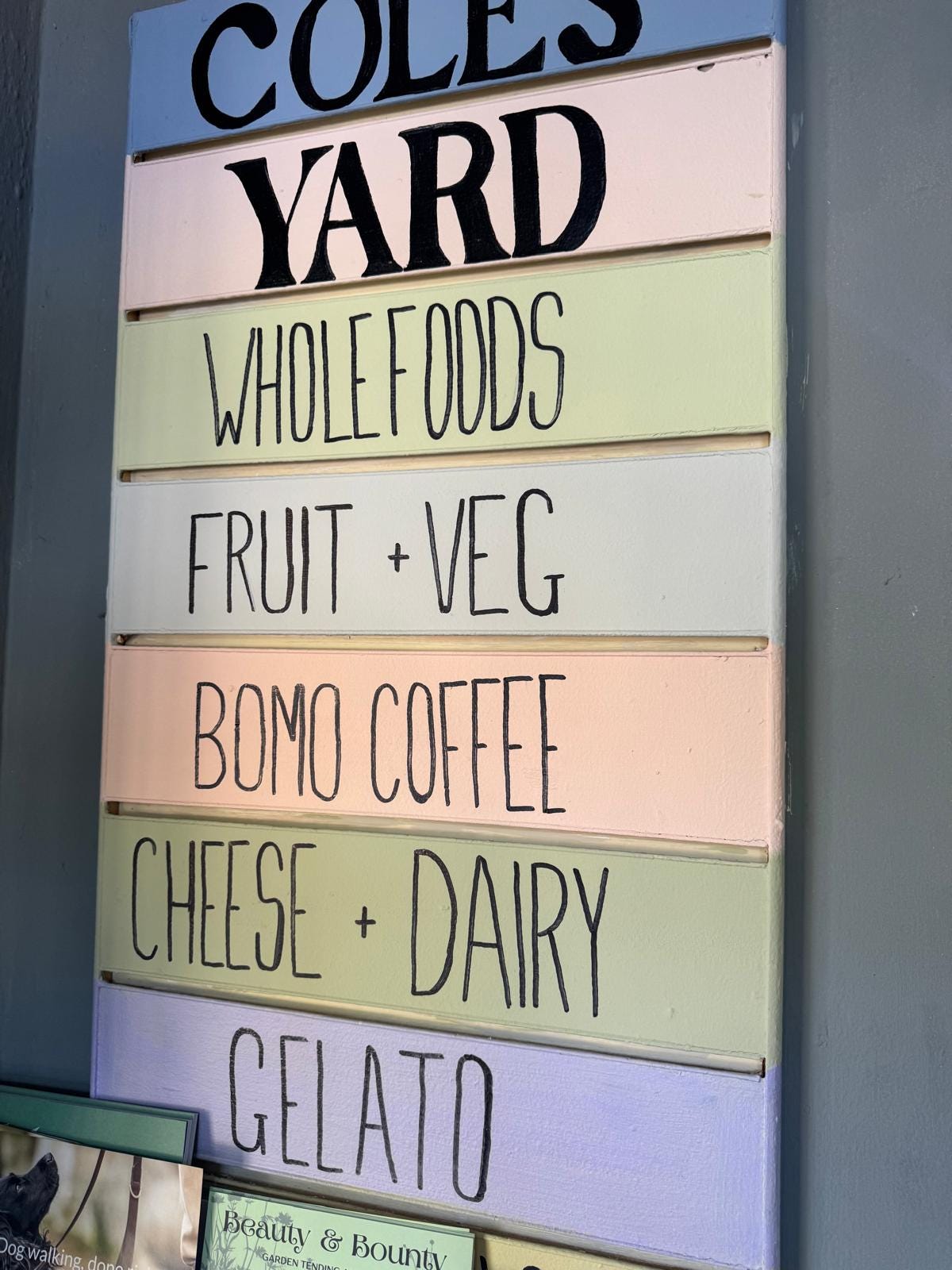
Because if we create those places, people will come. And when they come they will drink coffee, buy vegetables, have their hair cut, browse the records, pick up a birthday present, take something to be repaired and perhaps discover something they didn’t even know they wanted.
Most importantly, they will encounter one another.
I started my life behind the counter of a butcher’s shop on a North London High Street and, without planning it, I find myself living on a High Street again.
The world between those two High Streets has changed almost beyond recognition. But perhaps what we need from them hasn’t changed quite as much as we think.
A reason to go out. A familiar face. A conversation. A smile. A sense that we know where we are and that somebody knows who we are.
Perhaps the most important thing our High Streets can give us was never really for sale in the first place.
A sense of belonging.
Thank you Natalie. I hope all is well. xxx
Thank you Vivienne and good luck.